
Nonlinear Optical Crystals: The Heart of Modern Laser Technology
In the world of photonics, few components are as transformative as nonlinear optical crystals. These remarkable materials don’t just let light pass through—they reshape it, turning one wavelength into an entirely new spectrum of possibilities. From green laser pointers to cutting-edge quantum computers and terahertz scanners, nonlinear optical crystals are the hidden “frequency converters” powering today’s most advanced laser applications.
What Is a Nonlinear Optical Crystal?
Definition: A nonlinear optical crystal is a special optical material that can induce nonlinear optical effects in the laser passing through it, thereby changing the laser’s frequency, intensity, phase, or propagation direction and other characteristics.
Core Principle: When a strong laser (such as a pulsed laser) passes through this type of crystal, the crystal’s response to the optical field (i.e., the polarization intensity) is no longer a simple linear relationship with the optical electric field intensity. Instead, it produces nonlinear phenomena such as frequency doubling, sum-frequency generation, difference-frequency generation, and optical parametric oscillation.
A key condition for realizing these effects is “phase matching”—carefully controlling the laser’s propagation direction in the crystal so that light waves of different frequencies stay in sync, allowing the nonlinear effect to build efficiently.
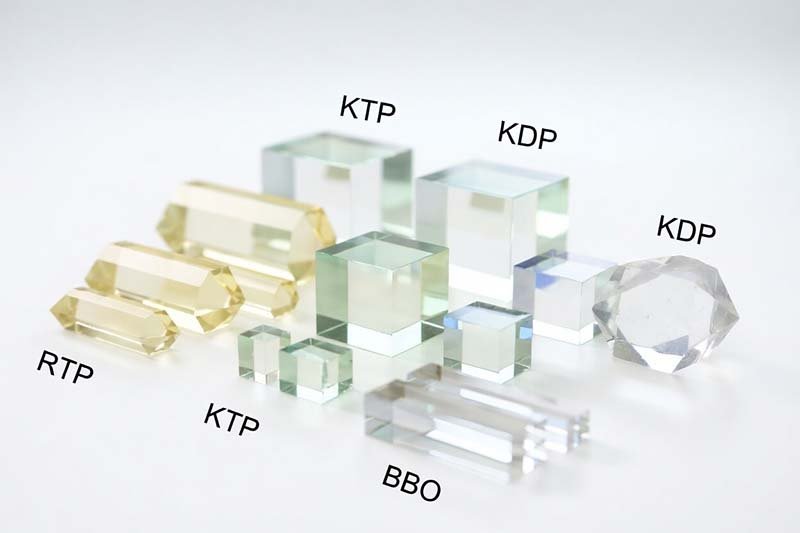
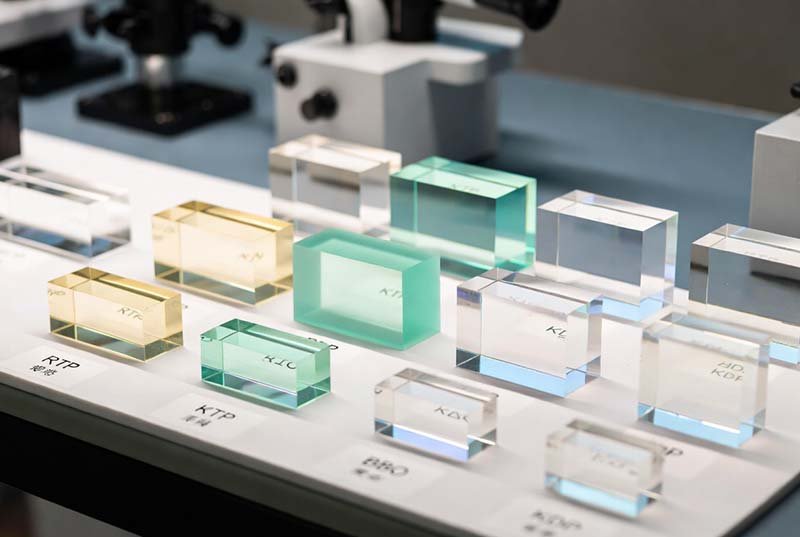
Common crystals include potassium titanyl phosphate (KTP), Rubidium Titanyl Phosphate (RTP),beta-barium borate (BBO), and potassium dihydrogen phosphate (KDP). They are indispensable in modern laser technology.
In simple terms: Nonlinear optical crystals are the “frequency converters” and “controllers” of laser technology, greatly expanding the wavelength range and application fields of lasers.
What Are Nonlinear Optical Crystals Used For?
Their core use is to “convert frequency” and “control” lasers, dramatically broadening what lasers can do. Here’s a breakdown:
I. Core Function: Laser Frequency Conversion
The most basic and important use—generating new wavelengths that traditional lasers cannot emit directly.
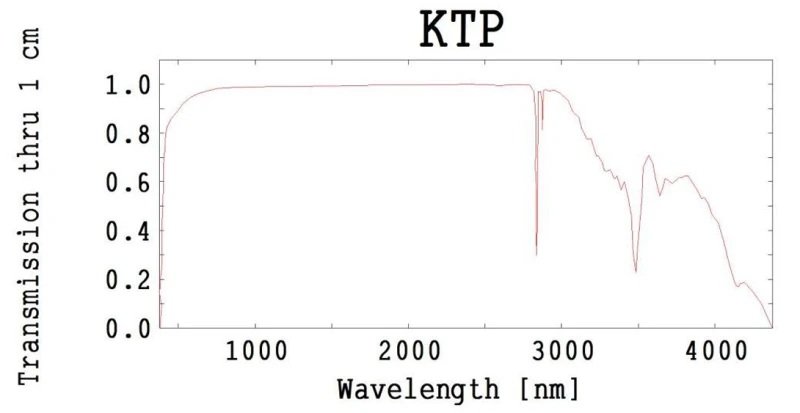
- Visible light — Convert infrared to green or blue. Example: KTP crystals double 1064 nm infrared to 532 nm green light (used in laser pointers, stage lighting, underwater communication, and medical devices).
- Ultraviolet & deep UV — BBO and CLBO crystals create UV light for semiconductor lithography, precision machining, and spectroscopy.
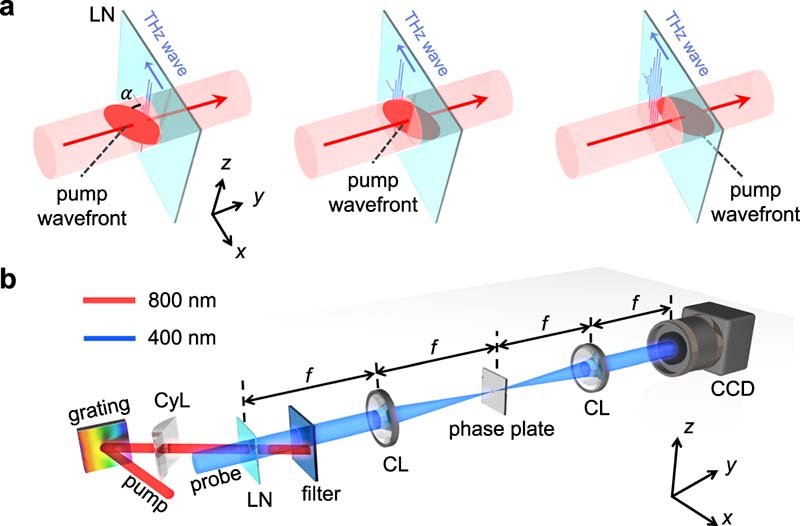
- Mid-infrared & terahertz — Optical parametric oscillation produces waves for gas sensing, environmental monitoring, medical diagnosis, and security checks.
II. Key Application Fields
Scientific frontiers
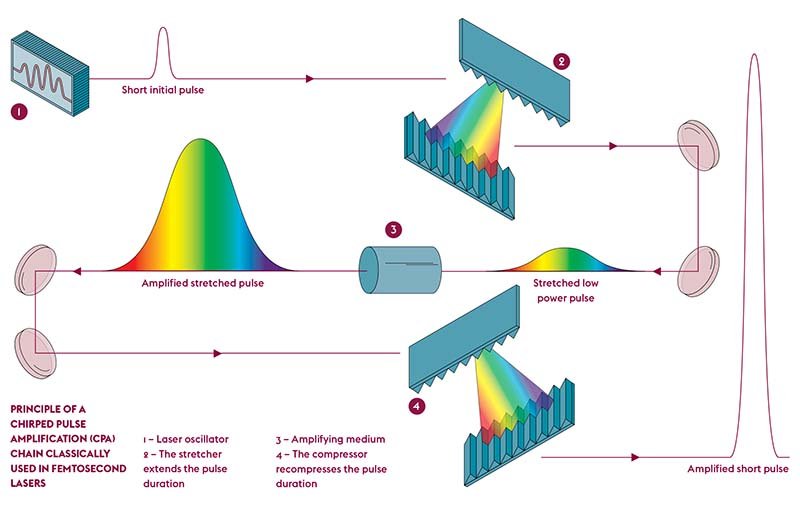
- Ultrafast lasers (femtosecond and attosecond pulses) for studying atomic and molecular dynamics.
- Quantum information: Entangled photon pairs via spontaneous parametric down-conversion—essential for quantum communication and computing.
- Precision spectroscopy across multiple bands.
Industry & IT
- Micro-nano processing with short-wavelength UV lasers.
- Future all-optical wavelength conversion for high-speed networks.
Medical & biological
- Ophthalmic surgery, skin treatments, and multiphoton fluorescence microscopy.
Defense & security
- Laser radar, countermeasures, and remote sensing.
Summary: Nonlinear optical crystals are one of the “heart” components of modern laser technology. They let a single fixed-wavelength laser (e.g., common infrared) transform into a full-spectrum source from deep UV to terahertz—enabling everything from basic research to high-end manufacturing and national security. Without them, many familiar laser technologies simply wouldn’t exist.
Appendix: What Is the Nonlinear Optical Effect?
The nonlinear optical effect occurs when a strong laser interacts with matter. The material’s response (electric polarization) is no longer linearly proportional to the electric field, producing new frequencies or energy conversions.
Key points:
- Requires strong coherent light (laser); ordinary light is too weak.
- Caused by electrons being driven out of simple harmonic motion, introducing higher-order terms (E², E³) in the polarization equation.
- Main phenomena: ① Frequency doubling (1064 nm → 532 nm green). ② Sum- and difference-frequency generation. ③ Optical parametric amplification/oscillation. ④ Self-focusing and self-phase modulation.
Phase matching is essential for efficiency.
Simple analogy: Linear optics is gently plucking a spring (proportional response). Nonlinear optics is smashing it—creating twists, harmonics, and entirely new motions.
What Is Laser? Types of Lasers (Classified by Working Medium)
Laser is light produced by stimulated emission. It features:
- Excellent directionality
- Superior monochromaticity
- High coherence
- Extreme brightness
Major types:
- Gas lasers (He-Ne red, CO₂ far-IR for cutting, argon ion blue-green)
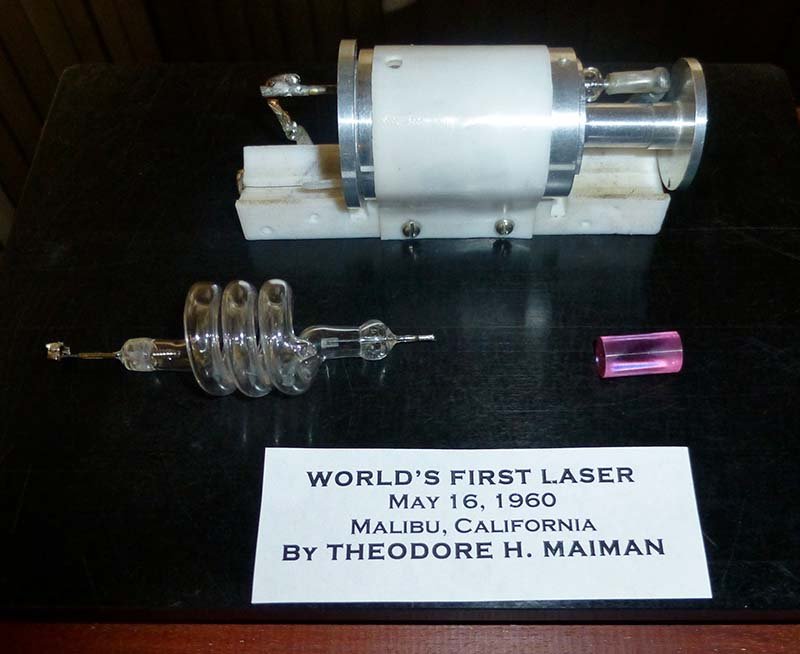
- Solid-state lasers (Nd:YAG near-IR, ruby—the world’s first laser)
- Semiconductor lasers (laser pointers, fiber optics, Blu-ray)
- Fiber lasers (industrial workhorses)
- Dye lasers (broadly tunable)
- Free-electron lasers (huge, widely tunable, high-power research tools)
What Is a Traditional Laser?
A traditional laser generates light directly from the energy levels of its working medium. The output wavelength is fixed or only narrowly tunable (e.g., Nd:YAG at 1064 nm, CO₂ at 10.6 μm). No external frequency conversion is involved.
Which Lasers Depend on Nonlinear Optical Crystals?
Almost every laser that needs a new wavelength relies on them. Traditional lasers can’t produce many critical bands directly—nonlinear crystals do the “frequency magic.”
| Produced Laser Color/Band | Common Method (Example) | Nonlinear Crystal (Example) | Main Applications |
|---|---|---|---|
| Green laser (532 nm) | Frequency doubling of 1064 nm Nd:YAG | KTP, LBO | Laser display, medical, research |
| Blue/UV laser | Further doubling or sum-frequency | BBO, CLBO, LBO | Lithography, precision machining |
| Deep UV laser | Multiple frequency doublings | BBO, KBBF | Frontier research, photoelectron spectroscopy |
| Tunable mid-IR laser | Optical parametric oscillation | KTP, PPLN, ZnGeP₂ | Gas detection, military countermeasures |
| Terahertz wave | Difference-frequency generation | ZnTe, GaSe, DAST | Nondestructive imaging, security |
| Femtosecond ultrafast laser | Spectral broadening & compression | Various crystals | Ultrafast research, micro-machining |
Nonlinear optical crystals are the “wavelength expanders” of laser technology. They shatter the limits of traditional laser materials, letting us manufacture any wavelength from deep ultraviolet to terahertz on demand—and opening the vast universe of modern laser applications.
Whether you’re a researcher chasing attosecond pulses, an engineer building the next photonic chip, or simply curious about that green laser pointer in your hand, nonlinear optical crystals are working behind the scenes to make it all possible.