
Rubidium Nitrate in Ultra-Low-Temperature SCR DeNOx Catalysts for Sulfur- and Water-Containing Flue Gas
1) Overview
This process produces an ultra-low-temperature SCR DeNOx catalyst designed to maintain activity in wet, sulfur-containing industrial flue gas where conventional V-based catalysts typically require higher temperatures and are prone to irreversible sulfur/water/alkali poisoning at <300°C.
The catalyst is built from three functional parts: (i) a high-surface-area, hydrophobic and selective carrier (ZSM-5 + TiO2 + modified diatomite, further treated with a silane coupling agent), (ii) an active phase generated from copper/nickel/chromium nitrates synergized with rubidium nitrate through mixing, short combustion, and calcination to create highly dispersed mixed oxide catalytic centers, and (iii) an additive package (cationic surfactant + ammonium heptamolybdate) to enhance anti-poisoning and stabilize performance under complex flue-gas components.
| Component | Mass Percentage | Functional Role |
|---|---|---|
| Active phase | 5–15% | Primary catalytic sites for NOx reduction at low temperature; generated by nitrate-derived mixed oxides with Rb-assisted synergy |
| Carrier | 75–85% | Provides structure, porosity, dispersion; hydrophobic/selective framework to resist H2O/SOx occupation |
| Additives | 5–15% | Anti-poisoning and stability: redox promotion and surface-property tuning under SO2/H2O/alkali |
2) Detailed Experimental Procedure
- Prepare Mix A: Combine ZSM-5 zeolite and TiO2 at a mass ratio of 1:2. Ball-mill at 500 r/min for 0.5 h to obtain Mix A.
- Prepare diatomite powder B (acid-treated): Ball-mill diatomite at 500 r/min for 0.5 h. Disperse in 10 wt% nitric acid solution, heat to 60°C, ultrasonicate for 1 h, cool to room temperature, wash with deionized water, then dry at 80°C for 12 h to obtain Powder B.
- Prepare Mix C: Combine Mix A with Powder B at a mass ratio of 1:(1–3). Ball-mill at 500 r/min for 0.5 h to obtain Mix C.
- Prepare solution D: Dissolve silane coupling agent KH550 in deionized water to a mass fraction of 30–50%. Heat to 60°C to obtain Solution D.
- Surface-modify the carrier: Add Mix C into Solution D. Control the mass ratio of Mix C : KH550 = 2:1. Stir at 60°C and 150 r/min for 4 h. Filter and dry at 80°C for 12 h to obtain the finished carrier.
- Maintain consistent milling intensity to ensure uniform dispersion and reproducible pore/particle structure.
- Thorough washing after nitric-acid treatment helps control residual nitrate/impurity carryover.
- KH550 treatment is a performance-critical step for water/sulfur resistance under wet flue gas.
- Prepare Mix E: Blend copper nitrate, nickel nitrate, and chromium nitrate at a mass ratio of 2:1:1. Add 1 wt% polyethylene glycol (PEG-2000). Ball-mill at 500 r/min for 0.5 h to obtain Mix E.
- Prepare rubidium nitrate solution: Dissolve rubidium nitrate in deionized water to obtain a 30–40 wt% RbNO3 solution.
- Disperse and react: Disperse Mix E into the RbNO3 solution, controlling Mix E : RbNO3 = 2:1 by mass. Heat to 50°C and stir at 200 r/min for 1 h.
- Fuel-assisted homogenization: Add 1 wt% glycine to the mixture and continue stirring for 0.5 h.
- Short combustion: Transfer the mixture to a muffle furnace preheated to 250–300°C. Combust for 2–3 minutes.
- Calcination: Increase temperature to 500°C at a heating rate of 5°C/min and hold for 4 h. Cool, then grind to achieve ~800-mesh particle size. The resulting powder is the active phase.
- The nitrate matrix decomposes into mixed metal oxides; the brief combustion step helps create high dispersion and intimate contact between components.
- Rubidium nitrate participates during precursor mixing and thermal decomposition to promote synergistic catalytic centers rather than isolated oxide domains.
- Glycine supports uniform distribution and stabilizes ions during rapid thermal events, improving low-temperature activity consistency.
- Prepare solution F: Dissolve a cationic surfactant in deionized water to a 50 wt% solution. Heat to 60°C to obtain Solution F.
- Introduce anti-poisoning promoter: Add ammonium heptamolybdate to Solution F with a mass ratio (ammonium heptamolybdate : surfactant) = 2:3. Ultrasonicate at 60°C for 0.5 h.
- Recover additive: Filter, dry at 80°C for 12 h, cool, then grind to ~800 mesh to obtain the additive powder.
- Usable surfactants include sodium dodecyl sulfate, sodium dodecyl sulfonate, and/or cetyltrimethylammonium bromide, singly or in combination.
- The surfactant primarily tunes surface wetting/adsorption behavior; heptamolybdate supports redox cycling and anti-poisoning performance.
- High-shear mixing: Add active phase, carrier, and additives according to the target mass percentages into a high-speed mixer. Add 1 wt% oxalic acid and an appropriate amount of deionized water. Mix at 3000 r/min for 5 h to obtain a mud-like paste (Mix G).
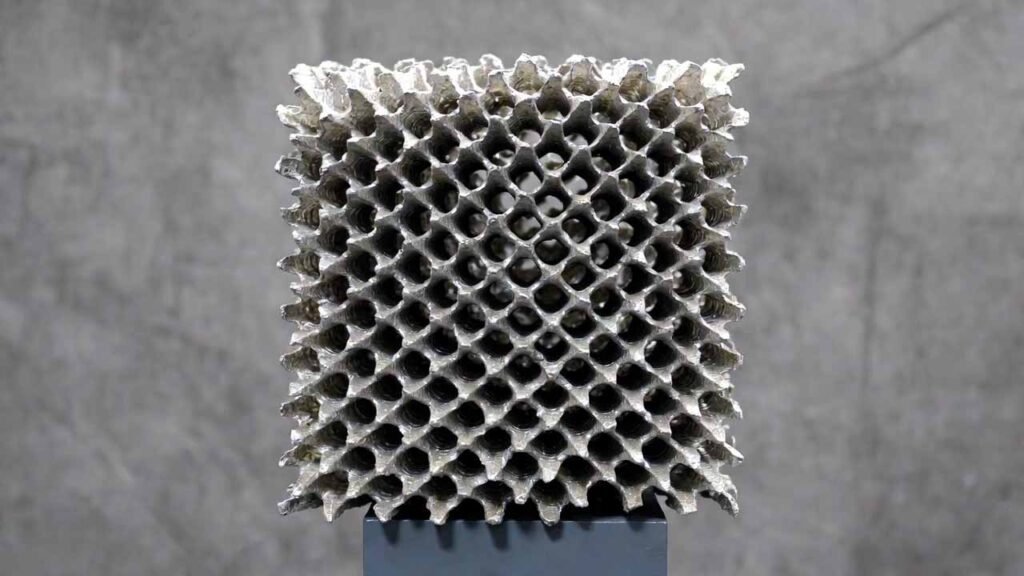
- Extrusion shaping: Extrude Mix G using a one-piece mold through a high-pressure extruder into a square, through-hole honeycomb body. Cut to the required length.
- Hot-air staged drying: Dry in 10 temperature stages from 25°C to 60°C, holding 18–24 h at each stage. Maintain drying-room humidity >80% before reaching 40°C to reduce cracking risk and preserve pore integrity.
- Programmed firing (31–42 h total): Fire in staged temperature zones from 120°C up to 480–560°C based on performance targets. Typical minimum holds: low-temp zone (120–180°C) ≥3 h, mid-temp zone (300–400°C) ≥13 h, high-temp zone (480–560°C) ≥15 h.
- Extrusion rheology must be stable (plasticity and water content) to maintain channel geometry and mechanical strength.
- Staged drying is critical for monolith integrity; rapid moisture loss can cause microcracks and strength loss.
- High-temperature setpoint within 480–560°C should be tuned to balance phase formation, adhesion, and pore preservation.
3) Comparison Summary: This Production Route vs. Conventional SCR Catalyst Approaches
| Dimension | Conventional V-based SCR (typical) | This Ultra-Low-Temperature Route (RbNO3-assisted) |
|---|---|---|
| Effective temperature | Often optimized for ~300–420°C | Designed for low/ultra-low temperature, especially ~100–150°C (usable across ~100–280°C) |
| Water & sulfur tolerance at low temperature | High risk of SOx/H2O occupation and irreversible poisoning below ~300°C | Hydrophobic/selective carrier + KH550 surface treatment + additive package reduces SOx/H2O impact on active sites |
| Active site construction | Often relies on impregnation/coating with limited control of multi-metal intimacy | Multi-nitrate co-processing with RbNO3 + short combustion + calcination promotes highly dispersed mixed-oxide centers |
| Anti-poisoning strategy | Limited against alkali/alkaline-earth and complex flue-gas contaminants in low-temp regimes | Heptamolybdate + tailored surface chemistry improves resistance to sulfur species and poisoning components |
| Manufacturability (monolith) | May require higher-temp operation or flue-gas reheating | Honeycomb extrusion + staged drying/firing supports deployment in low-temp ducts without costly reheating |
4) Why Rubidium Nitrate Matters Here: Performance Advantages in Ultra-Low-Temperature DeNOx
Rubidium nitrate is not a passive salt in this workflow. It is introduced as a controllable rubidium source during active-phase precursor formation, where it interacts with copper/nickel/chromium nitrates during solution mixing, combustion, and calcination. This sequence helps generate catalytic centers that remain effective when flue gas is cold and chemically aggressive.
- Synergistic catalytic-center formation: Co-processing metal nitrates with RbNO3 promotes intimate mixing at the precursor level, supporting the formation of highly dispersed mixed oxides after decomposition—key for high activity at 100–150°C.
- Improved resistance to poisoning species: Rubidium can help tune surface charge distribution and acid–base characteristics, which supports stable adsorption/activation behavior for SCR reactants under SOx/H2O presence and reduces deactivation tendency.
- Supports low-temperature kinetics: At ultra-low temperatures, reaction rates are strongly limited by adsorption, activation, and electron-transfer steps. Rubidium introduction during active-phase construction can improve the “readiness” of surface sites, enabling meaningful NOx conversion without external reheating.
- Process controllability for scale-up: Using rubidium nitrate as the rubidium carrier allows precise concentration control (30–40 wt% solution) and consistent incorporation via a standard wet-mixing and thermal decomposition route—valuable for batch-to-batch repeatability.
- Compatibility with monolith manufacturing: Because rubidium is integrated into the active-phase powder before kneading/extrusion, it reduces reliance on post-coating steps and helps preserve uniformity across the honeycomb geometry.
- Track active-phase particle size (target ~800 mesh) and confirm dispersion uniformity before extrusion.
- Monitor heating rate (5°C/min to 500°C) and combustion dwell time (2–3 min at 250–300°C preheat) to avoid over-sintering.
- Validate hydrophobic treatment effectiveness (KH550 step) under wet-gas exposure; this step is often the difference-maker for durability. The synthesis method mentioned in this article references patent document number CN202411479093.0