Rubidium Sulfate
Synonyms: Sulfuric acid, dirubidium salt, Dirubidium sulfate, Rubidium Salt
CAS Number: 7488-54-2 , EC Number:231-301-7
Brand Name : DQ
Percentage assay:99.5%
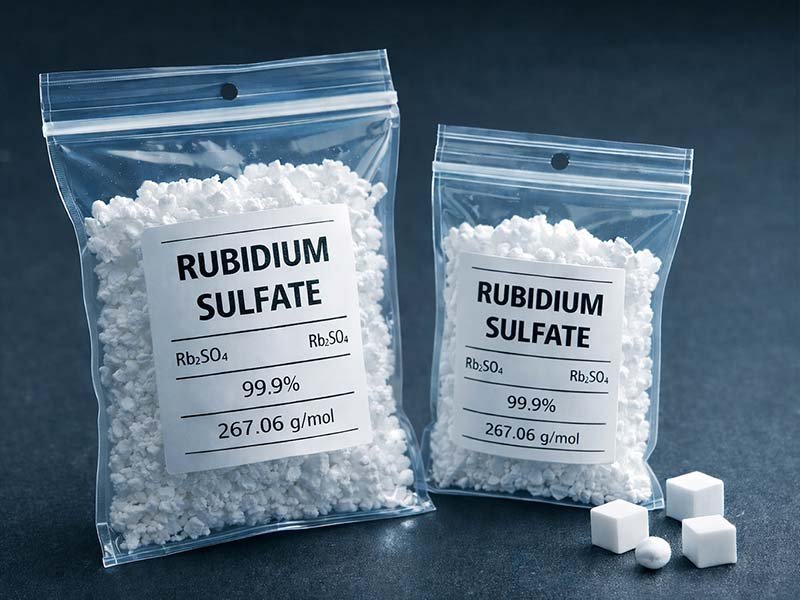
Package Information: Bottle or 25kg/drum or customized packing
Rubidium Sulfate Price
Product Information
Impurity Content (Mass Fraction)/%, Not Exceeding
| Product Grade | Li | Na | K | Cs | Ca | Mg | Fe | Al | Si | Pb |
|---|---|---|---|---|---|---|---|---|---|---|
| 99.0% | 0.0010 | 0.020 | 0.020 | 0.40 | 0.050 | 0.0010 | 0.0010 | 0.0010 | 0.0050 | 0.0010 |
| 99.5% | 0.0010 | 0.010 | 0.020 | 0.20 | 0.0050 | 0.0010 | 0.0005 | 0.0050 | 0.0050 | 0.0005 |
| 99.9% | 0.0010 | 0.010 | 0.010 | 0.01 | 0.0010 | 0.0005 | 0.0005 | 0.0005 | 0.0001 | 0.0001 |
| Parameter | Details | Units |
|---|---|---|
| Chemical Formula | Rb₂SO₄ | – |
| Molecular Weight | 266.999 (commonly rounded to 267.00) | g/mol |
| Appearance | White crystalline solid or powder | – |
| Melting Point | 1050 | °C |
| Boiling Point | ~1700 (decomposes at high temperatures) | °C |
| Density | 3.613 | g/cm³ |
| Solubility in Water | Highly soluble (36 g/100 g water at 0°C; 82 g/100 g water at 100°C) | g/100 g water |
| Solubility in Other Solvents | Insoluble in ethanol and most organic solvents | – |
| pH | Aqueous solution approximately neutral (~7) | – |
| Crystal Structure | Orthorhombic | – |
| Thermal Conductivity | Low (typical of ionic compounds; specific data limited) | – |
| Electrical Conductivity | Low in solid state; conductive in molten state or aqueous solution (ionic conduction) | – |
| Common Uses | Catalyst in organic synthesis, production of other rubidium compounds, special optical glass, photoelectric materials, laboratory reagent | – |
| Hazards Level | Low toxicity; hygroscopic; may irritate skin and eyes; handle with standard laboratory precautions | – |
Rubidium Sulfate Formul
| Reaction Type | Chemical Equation | Description |
|---|---|---|
| Neutralization (Common Preparation) | 2 RbOH + H₂SO₄ → Rb₂SO₄ + 2 H₂O | Rubidium hydroxide reacts with sulfuric acid to form rubidium sulfate and water |
| Carbonate Acidification (Preparation) | Rb₂CO₃ + H₂SO₄ → Rb₂SO₄ + CO₂↑ + H₂O | Rubidium carbonate reacts with sulfuric acid, releasing carbon dioxide |
| Metal Displacement (Vigorous) | 2 Rb + H₂SO₄ (dilute) → Rb₂SO₄ + H₂↑ | Rubidium metal reacts violently with dilute sulfuric acid to produce hydrogen gas (use with caution) |
| Metathesis (Precipitation) | Rb₂SO₄ + BaCl₂ → BaSO₄↓ + 2 RbCl | Reacts with barium chloride to form insoluble barium sulfate precipitate (used for sulfate ion detection) |
| Metathesis (Barium Nitrate) | Rb₂SO₄ + Ba(NO₃)₂ → BaSO₄↓ + 2 RbNO₃ | Reacts with barium nitrate to form barium sulfate precipitate |
| Double Salt Formation | Y₂(SO₄)₃ + Rb₂SO₄ → Rb₃Y(SO₄)₃ or similar alum | Forms alums or double salts with certain metal sulfates (e.g., yttrium sulfate) |
| Hydrolysis (Weak, Reversible) | Rb₂SO₄ + 2 H₂O ⇌ 2 RbOH + H₂SO₄ | Very weak hydrolysis in aqueous solution (practically negligible) |
Applications of Rubidium Sulfate
| Application area | How Rubidium Sulfate (Rb₂SO₄) is used |
|---|---|
| Laboratory reagent | Used to prepare rubidium-ion solutions and as a general-purpose inorganic reagent in R&D and analytical labs. |
| Precursor for other rubidium salts | Converted into other rubidium compounds through salt-conversion reactions. |
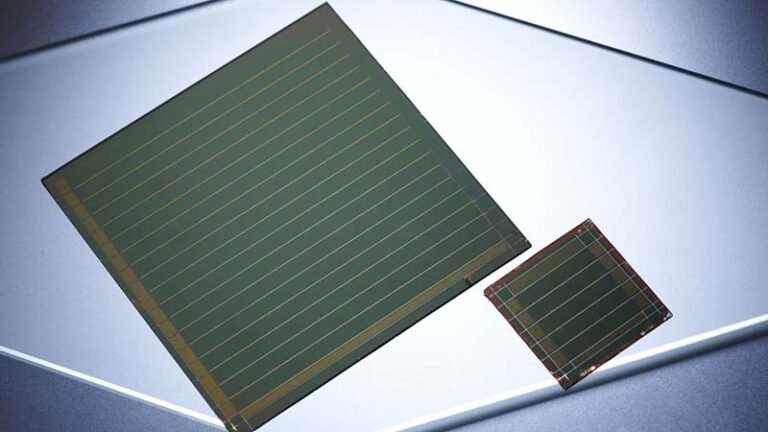
| Specialty glass & ceramics | Added as a rubidium source in glass and ceramic formulations to modify material properties in specialty compositions. |
| Crystal growth & materials science | Feedstock for producing rubidium-containing crystals and related functional materials in research. |
| Catalysis | Used as a catalyst or catalyst component in certain specialty chemical processes and studies. |
| Analytical chemistry | Used as a controlled sulfate source in analytical methods and demonstrations involving sulfate reactions. |
| Hematology staining | Included in some niche staining formulations or protocols. |
| Gas chromatography detectors | Referenced as a material used in certain thermionic detector configurations. |
Safety Information
Rubidium sulfate is generally considered low hazard, primarily classified as a mild skin and eye irritant under GHS.
| Category | Details |
|---|---|
| GHS Classification | Skin Irritation Category 2 (H315) Eye Irritation Category 2A (H319) |
| Signal Word | Warning |
| Pictogram | Exclamation mark (GHS07) |
| Hazard Statements | H315: Causes skin irritation H319: Causes serious eye irritation |
| Precautionary Statements | P264: Wash thoroughly after handling P280: Wear protective gloves/eye protection/face protection P302+P352: If on skin, wash with plenty of soap and water P305+P351+P338: If in eyes, rinse cautiously with water for several minutes (remove contact lenses if present) P332+P313: If skin irritation occurs, get medical advice P337+P313: If eye irritation persists, get medical advice P362: Take off contaminated clothing and wash before reuse |
| Acute Toxicity | Low; LD50 oral (rat): ~4,594 mg/kg Potential effects at high doses: spastic paralysis, somnolence, convulsions (animal studies) |
| Skin/Eye Effects | Irritating to skin and eyes; no data on corrosion or sensitization |
| Inhalation | May irritate respiratory tract if dust is inhaled; avoid dust formation |
| Ingestion | May be harmful if swallowed in large amounts; rinse mouth, seek medical attention if needed |
| Chronic Effects | No known carcinogenicity, mutagenicity, or reproductive toxicity |
| First Aid – Eyes | Rinse cautiously with water for several minutes; remove contact lenses if present; seek medical attention if irritation persists |
| First Aid – Skin | Wash with plenty of soap and water; seek medical attention if irritation occurs |
| First Aid – Inhalation | Move to fresh air; seek medical attention if symptoms persist |
| First Aid – Ingestion | Rinse mouth; do not induce vomiting; seek medical attention |
| Handling Precautions | Avoid dust formation; use in well-ventilated area; wear appropriate PPE (gloves, eye protection, dust mask if needed) |
| Storage | Store in a cool, dry, well-ventilated place; keep container tightly closed (hygroscopic) |
| Personal Protective Equipment | Safety glasses, protective gloves (e.g., nitrile), lab coat; respiratory protection for dust exposure |
| Environmental Hazards | No significant ecological toxicity data; do not release to drains |
| Disposal | Dispose according to local regulations; not typically classified as hazardous waste |
| Fire/Explosion Hazards | Non-flammable; no special fire risks |
Frequently Asked Questions
Most frequent questions and answers
What grades of Rubidium Sulfate do you offer (industrial / reagent / high purity)?
We supply multiple grades tailored to application needs, typically including reagent grade and high-purity grade for materials research and crystal growth. We can align grade selection to your impurity targets and process sensitivity.
What is your typical purity specification, and how is purity tested?
Purity is usually stated as Rb₂SO₄ assay on a dry basis. We provide a COA per batch with assay results and key impurity data. Common testing includes ICP-OES/ICP-MS for trace metals and wet chemistry/ion methods for sulfate-related parameters, depending on the required spec.
Which impurities can you control tightly for crystal growth & materials science (K, Na, Cs, Li, Fe, Ca, Mg, Cl)?
For crystal growth and high-end materials, customers often focus on alkali impurities (K/Na/Cs/Li), transition metals (Fe/Ni/Cr/Cu), and anions like chloride. We can offer “low-alkali / low-trace metals” options and share typical impurity profiles before ordering.
Do you offer “low chloride” or “low nitrate” versions for glass/ceramics and sensitive processes?
Yes. If your process is sensitive to halides or other anions (e.g., corrosion risk, optical defects, conductivity shifts), we can propose a production route and QC plan targeting low chloride (and other anions if needed).
Is Rubidium Sulfate hygroscopic, and how should it be stored/handled?
Rb₂SO₄ can pick up moisture depending on environment. We recommend storing sealed in a dry place, minimizing exposure time during weighing, and using desiccant or moisture-barrier packaging for long-distance transport and high-humidity regions.
Is Rubidium Sulfate regulated as dangerous goods for air/sea shipment?
Classification depends on the SDS and shipment mode. In many cases, inorganic salts like Rb₂SO₄ are shipped as non-DG, but we always confirm according to the latest transport rules and provide the correct SDS and packing guidance for IATA/IMDG compliance.